

 Coral Restored1 / 6 · from the field
Wilder Reefs
Nusa Penida, IndonesiaPartner: Mossy Earth
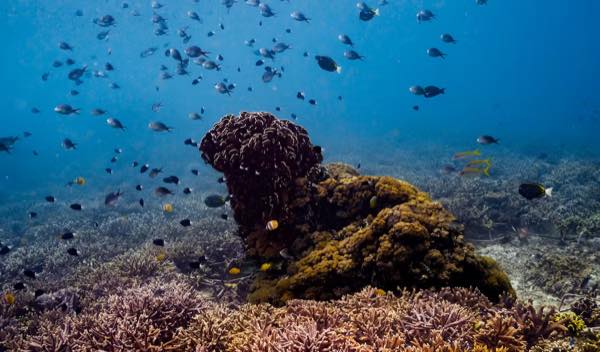
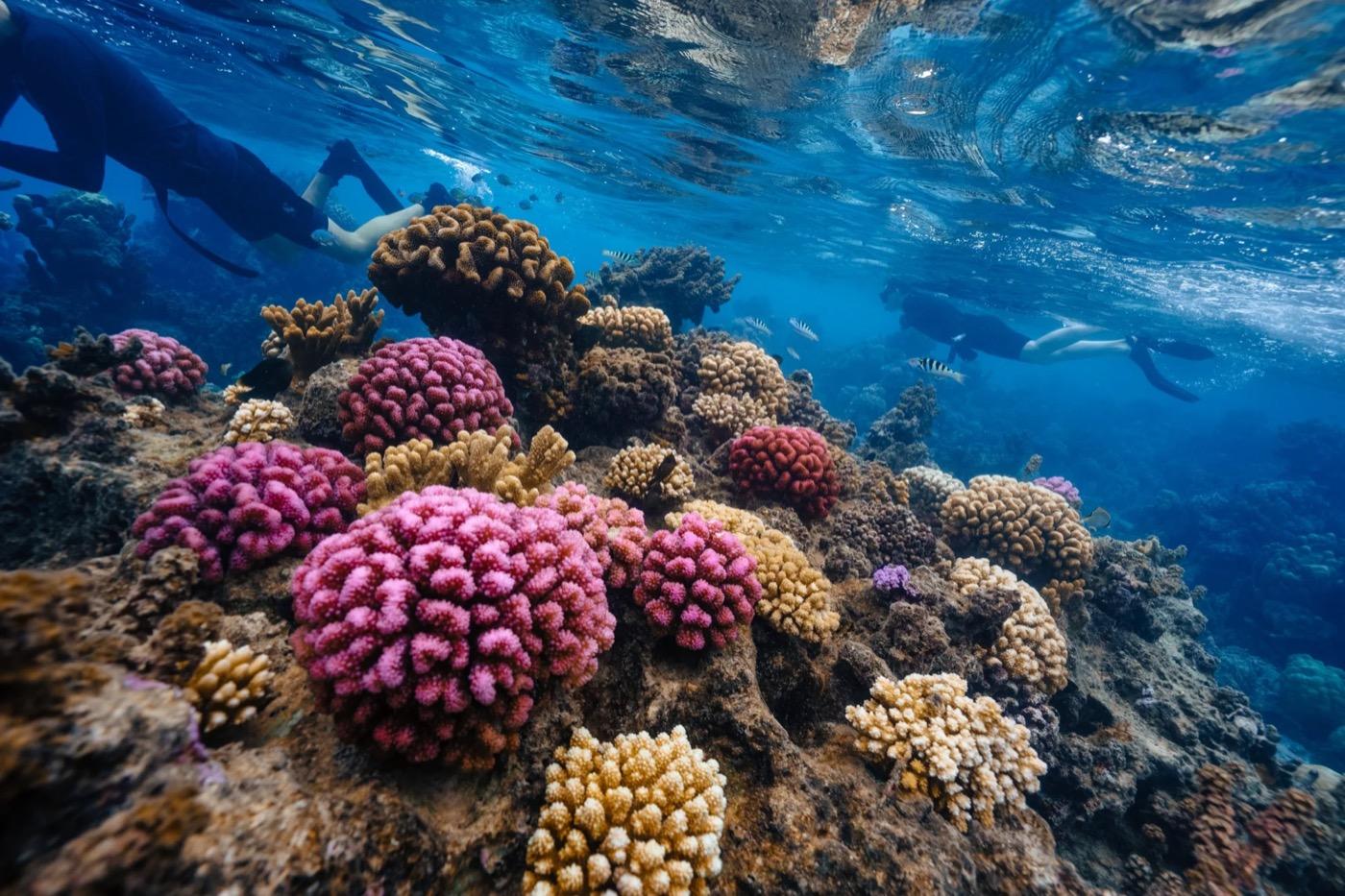
Restoring the fragmented reef in the Nusa Penida Marine Protected Area, Indonesia, stabilising coral rubble with modular reef structures and replanting naturally-dislodged fragments to kickstart recovery.
- Partner
- Mossy Earth
- Country
- Nusa Penida, Indonesia
- Impact
- Coral Restored
- Status
- Available
How the project works
The reef within the Nusa Penida Marine Protected Area is fragmented, with large areas of coral rubble left by a history of dynamite fishing, anchor damage and overfishing. Although education and new regulations have largely stopped these practices, the damaged substrate leaves craterous scars that struggle to consolidate, and its constant movement in the currents creates a killing field for coral larvae. Without intervention it could take hundreds of years for the rubble to stabilise on its own.
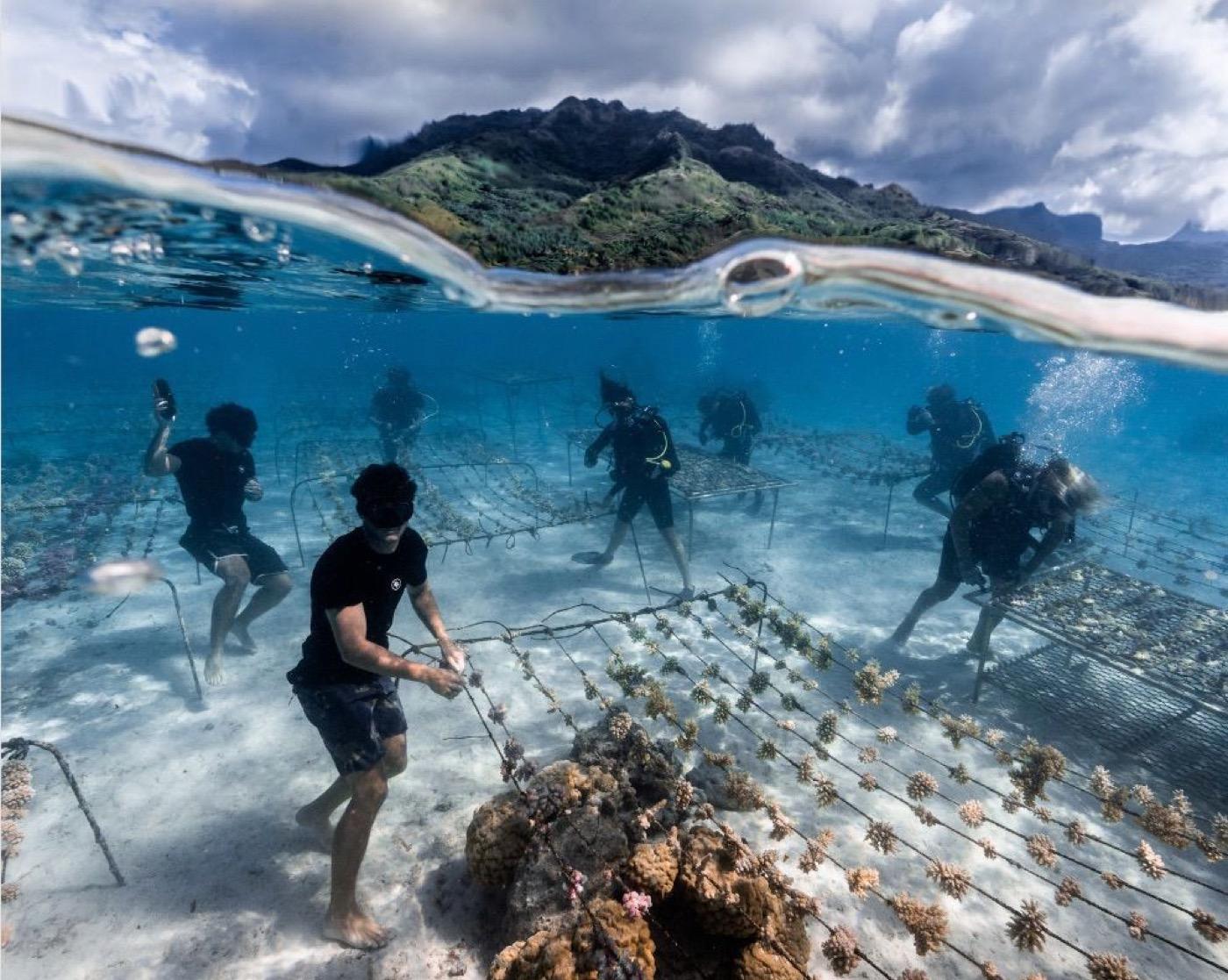
To stabilise the substrate, we install modular steel hexagonal frames that hold down the rubble and give coral polyps a stable structure to settle on. We translocate a mix of coral fragments that have naturally dislodged from the surrounding healthy reef to kickstart colonisation, and use micro-fragging, placing fragments of the same individual onto one structure so they reconnect into a single large colony as they grow.
Our project area is not among the most thermally vulnerable reefs: it sits within a localised potential thermal refugium, where high subsurface temperature variability and localised cooling may help reduce heat stress and support reef persistence. Increasing coral cover, diversity and connectivity helps prepare the reef for more frequent marine heatwaves by improving its resistance, recovery and adaptation.
In the water, our metal hexagonal structures are coated in resin and sand, to resist erosion and promote attachment, then staked to the seabed over rubble areas. Coral fragments are collected as loose, naturally-dislodged pieces across a range of species to mimic the natural colonisation of a new reef. We monitor regularly to brush off smothering macro-algae and inspect coral health through calcium-carbonate deposition, thriving corals actively expand their skeletons.
Coral reefs support the highest biodiversity of any ecosystem on Earth, up to 750 coral species can live on a single reef, sheltering countless algae, sponges, worms, molluscs, crustaceans and fish in their three-dimensional labyrinths. Corals themselves are living animals: colonies of tiny polyps whose calcium-carbonate skeletons, built over millennia, form the reefs that are the foundation of these underwater ecosystems.
The scale of loss is stark, an estimated 50% of coral reefs have been lost in the last 30 years, declining faster than birds, mammals or amphibians. The major threats are global warming and destructive, overexploitative fishing, compounded by pollution and coastal development. This is our first project aimed at tackling the coral crisis with the tools available today.
Restoration is not a silver bullet, it does not replace urgent climate action, but it is an essential tool for building reef resilience where natural recolonisation is limited and local threats can be mitigated. To give reefs the best chance of surviving into the future, climate action, reduced human pressure and effective restoration all need to happen together.
How your contribution adds up
Restoration is broken down into individual coral fragments, so anyone can start contributing, one fragment at a time. Every 15 fragments is transplanted onto a single modular structure that grows into one reef structure (~2,160 cm² / ~335 in² of living reef).
Watch the project
What this project moves forward
This project contributes to the following UN SDGs.
 Goal 14Life Below Water
Conserve and sustainably use the oceans, seas and marine resources for sustainable development.
Learn more Goal 13Climate Action
Take urgent action to combat climate change and its impacts.
Learn more Goal 3Good Health & Wellbeing
Ensure healthy lives and promote well-being for all at all ages.
Learn more Goal 12Responsible Consumption & Production
Ensure sustainable consumption and production patterns.
Learn more Goal 17Partnerships For The Goals
Strengthen the means of implementation and revitalize the Global Partnership for Sustainable Development.
Learn more
Project location
Loading map…
More coral restoration projects
Help projects like this one grow
Every contribution is tracked back to a real project, with photos, receipts and a certificate.