
 Trees Planted1 / 7 · from the field
Forest Gardens in Tanzania
TanzaniaPartner: Trees for the Future
Restoring degraded farmland across Tanzania's Simiyu and Mwanza regions with the Forest Garden Approach - training smallholder farmers to grow diverse trees and crops that rebuild soil, food security and income.
- Partner
- Trees for the Future
- Country
- Tanzania
- Impact
- Trees Planted
- Status
- Available
How the project works
Along the southern shores of Lake Victoria, in Tanzania's Simiyu and Mwanza regions, roughly 70% of rural households depend on the land for their livelihoods. Years of monocropping, overgrazing and increasingly erratic rains have degraded the soil, and each wet season washes more of it away, leaving families with eroding fields and shrinking harvests.
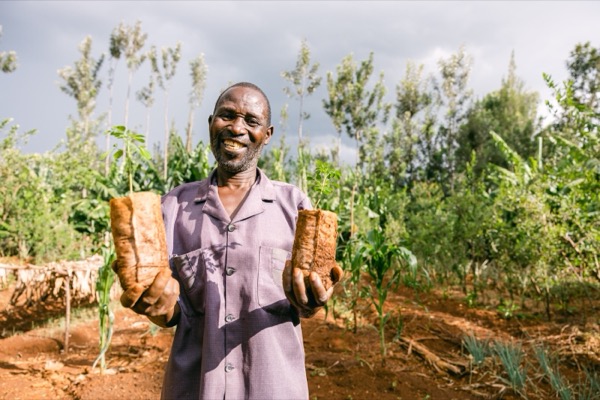
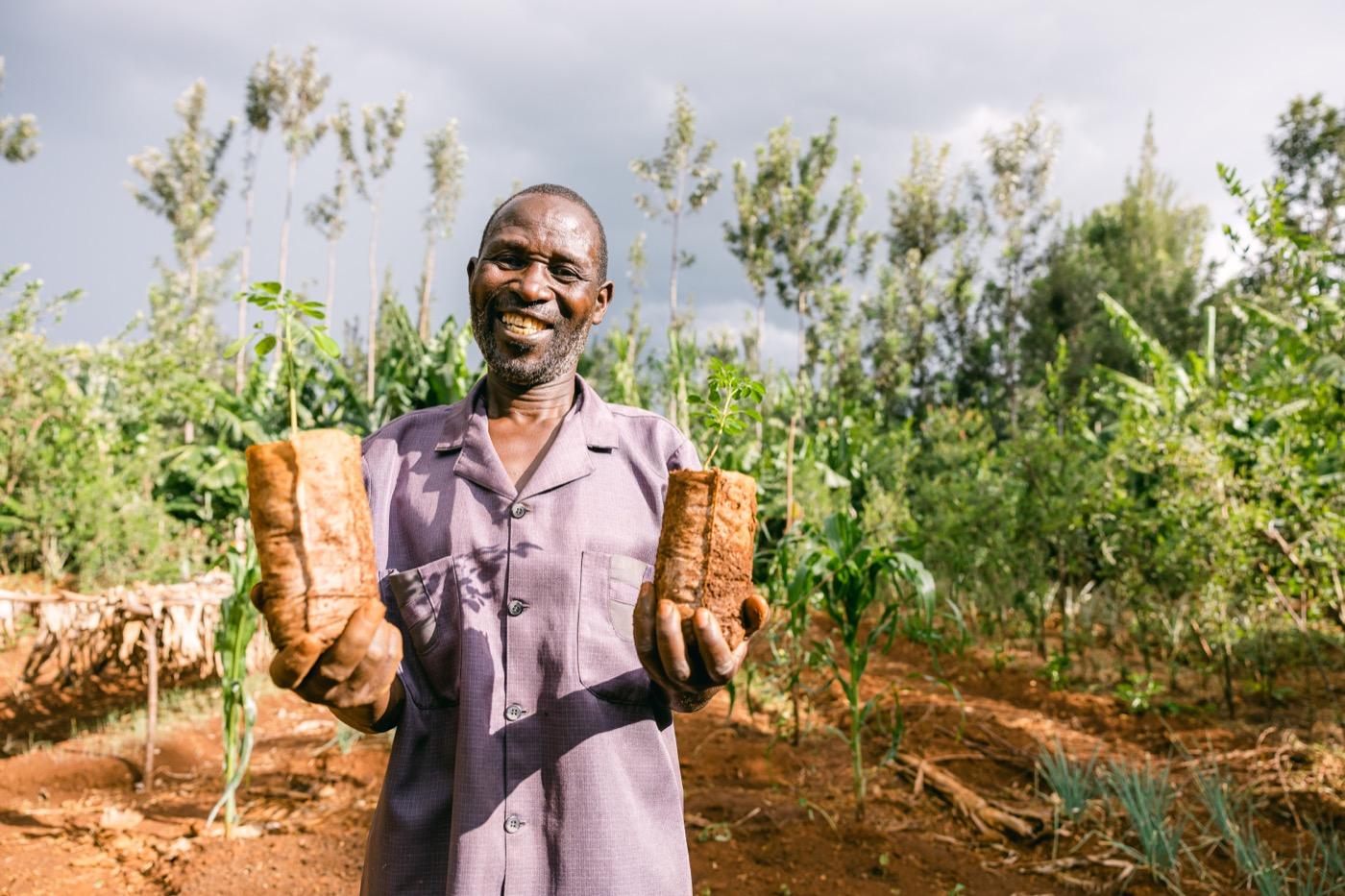
Trees for the Future works alongside smallholder farmers to turn these depleted plots into Forest Gardens through a four-year, hands-on training programme. Farmers plant thousands of trees as living fences and windbreaks, then layer diverse crops within - rebuilding a resilient, multi-storey system that protects and regenerates the soil.
A single-crop field becomes a garden of papaya, passion fruit, pigeon pea, tomato, eggplant, cabbage, okra, onion, leafy greens and more, growing among the trees. This diversity delivers a steady, year-round harvest of nutritious food instead of one seasonal crop that can fail.
Local project officers and experienced lead farmers provide continuous, field-based support - grafting workshops, tools such as rain barrels, compost guidance and regular farm visits - so techniques take root and spread from farmer to farmer across the community.
As soils recover, so do incomes. Farmers reach market more often with fuller baskets, some reporting several times the sales they made before. Restored land, reliable food and diversified income build lasting stability for families and ease pressure on the surrounding Lake Victoria watershed.
Across Simiyu and Mwanza the programme is bringing thousands of acres of degraded land back to life, improving biodiversity, water retention and climate resilience. Every tree planted helps rebuild a landscape - and a livelihood - from the ground up.
What this project moves forward
This project contributes to the following UN SDGs.
 Goal 13Climate Action
Take urgent action to combat climate change and its impacts.
Learn more Goal 15Life On Land
Protect, restore and promote sustainable use of terrestrial ecosystems, sustainably manage forests, combat desertification, and halt and reverse land degradation and biodiversity loss.
Learn more Goal 2Zero Hunger
End hunger, achieve food security and improved nutrition and promote sustainable agriculture.
Learn more Goal 1No Poverty
End poverty in all its forms everywhere.
Learn more Goal 8Decent Work & Economic Growth
Promote sustained, inclusive and sustainable economic growth, full and productive employment and decent work for all.
Learn more Goal 6Clean Water & Sanitation
Ensure availability and sustainable management of water and sanitation for all.
Learn more Goal 17Partnerships For The Goals
Strengthen the means of implementation and revitalize the Global Partnership for Sustainable Development.
Learn more
Project location
Loading map…
More tree planting projects



Help projects like this one grow
Every contribution is tracked back to a real project, with photos, receipts and a certificate.